
PHYSICAL TESTING
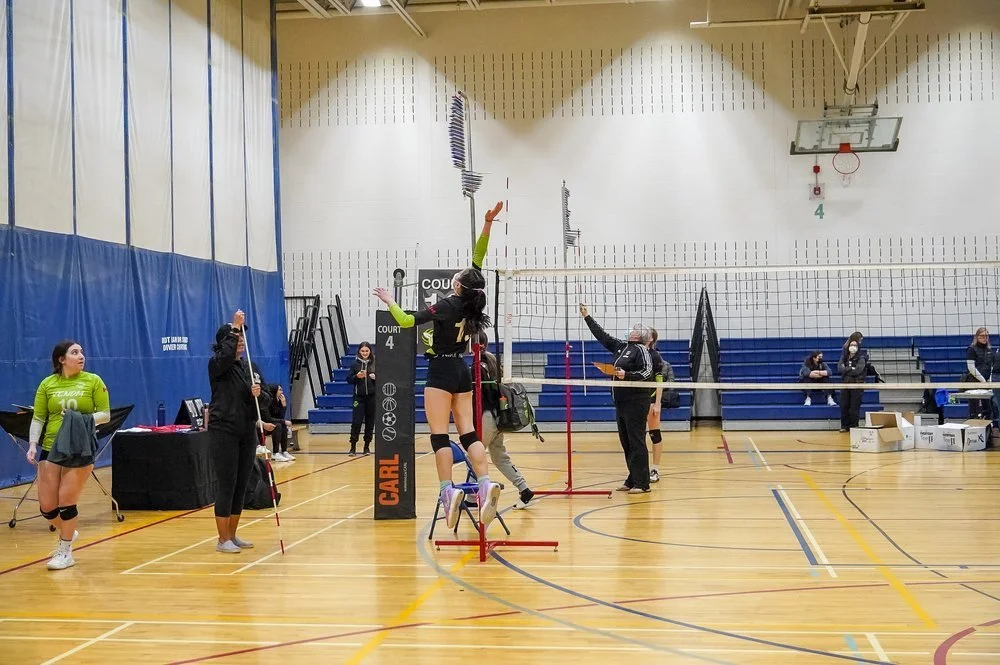
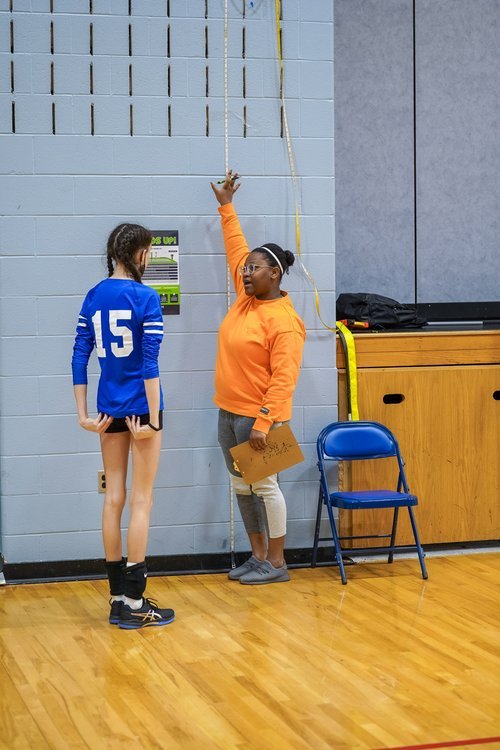
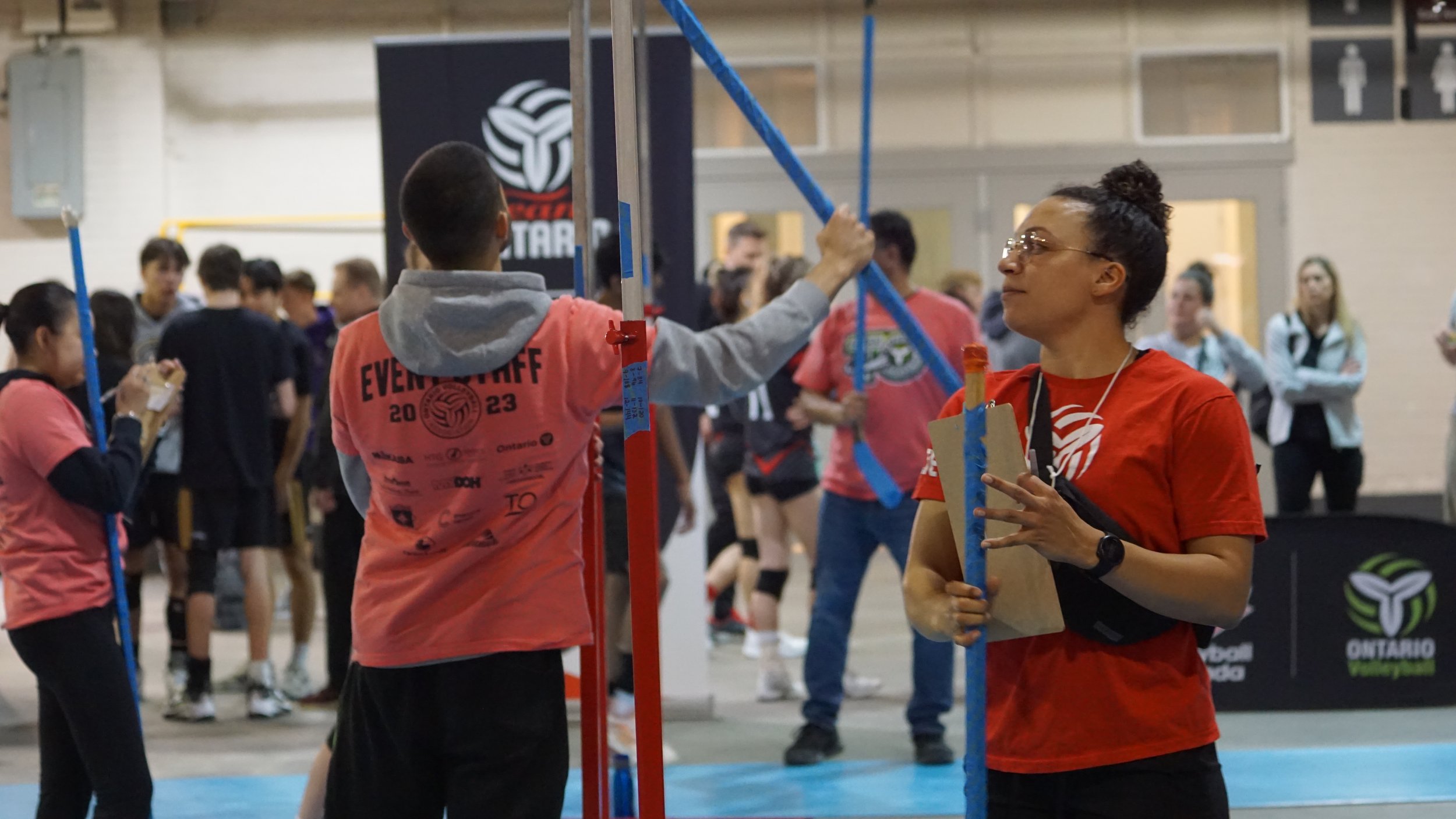
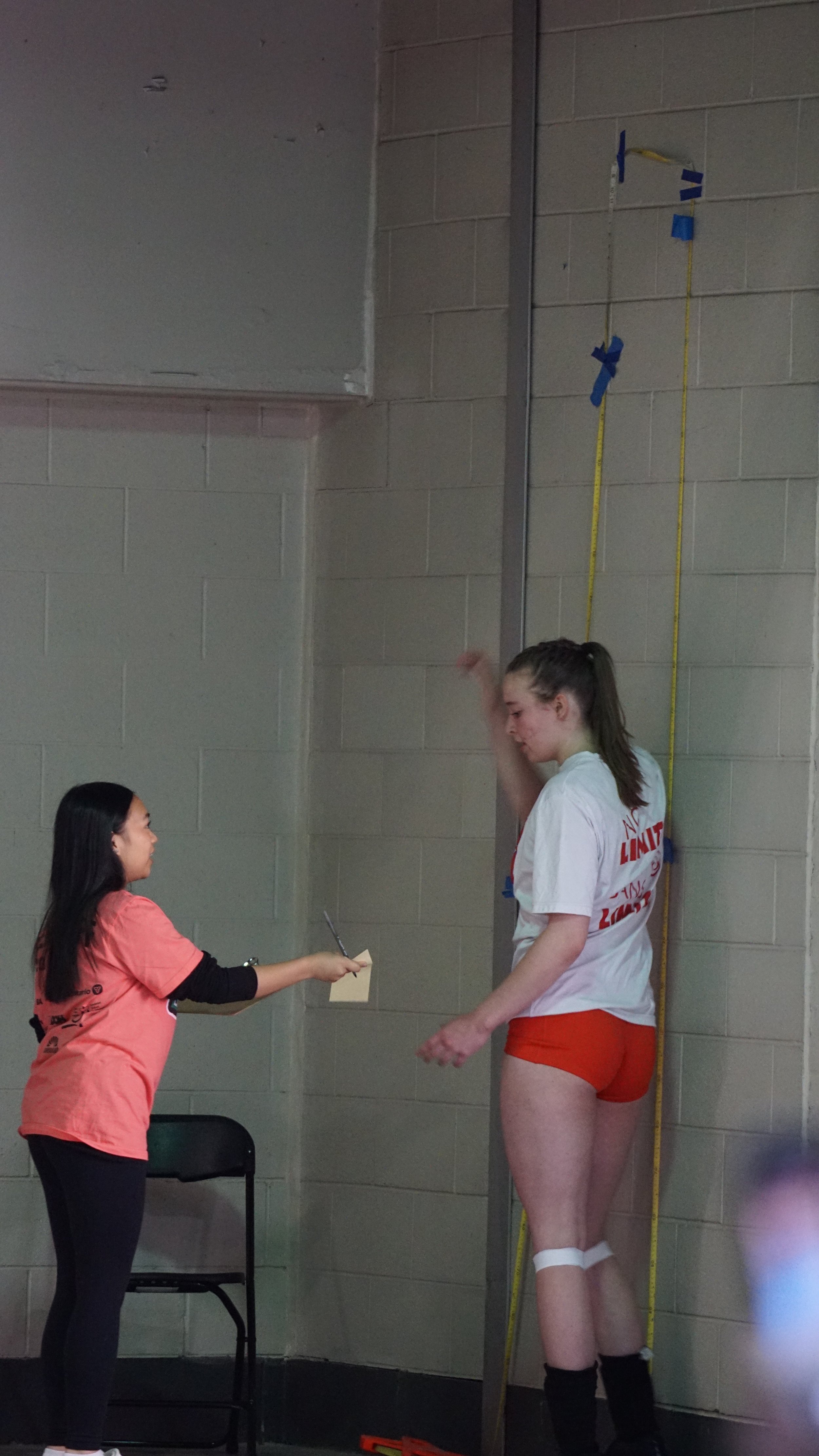
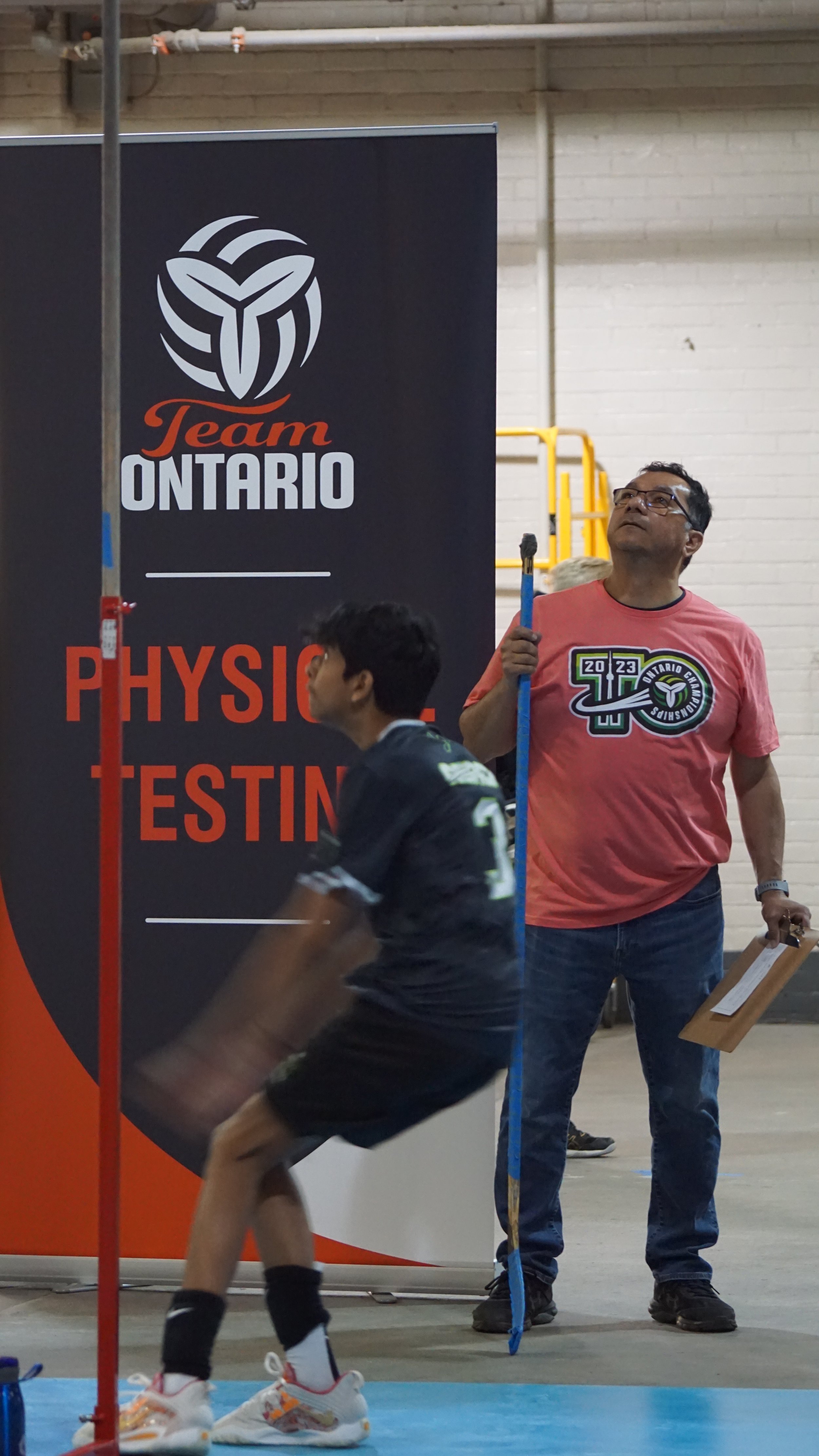
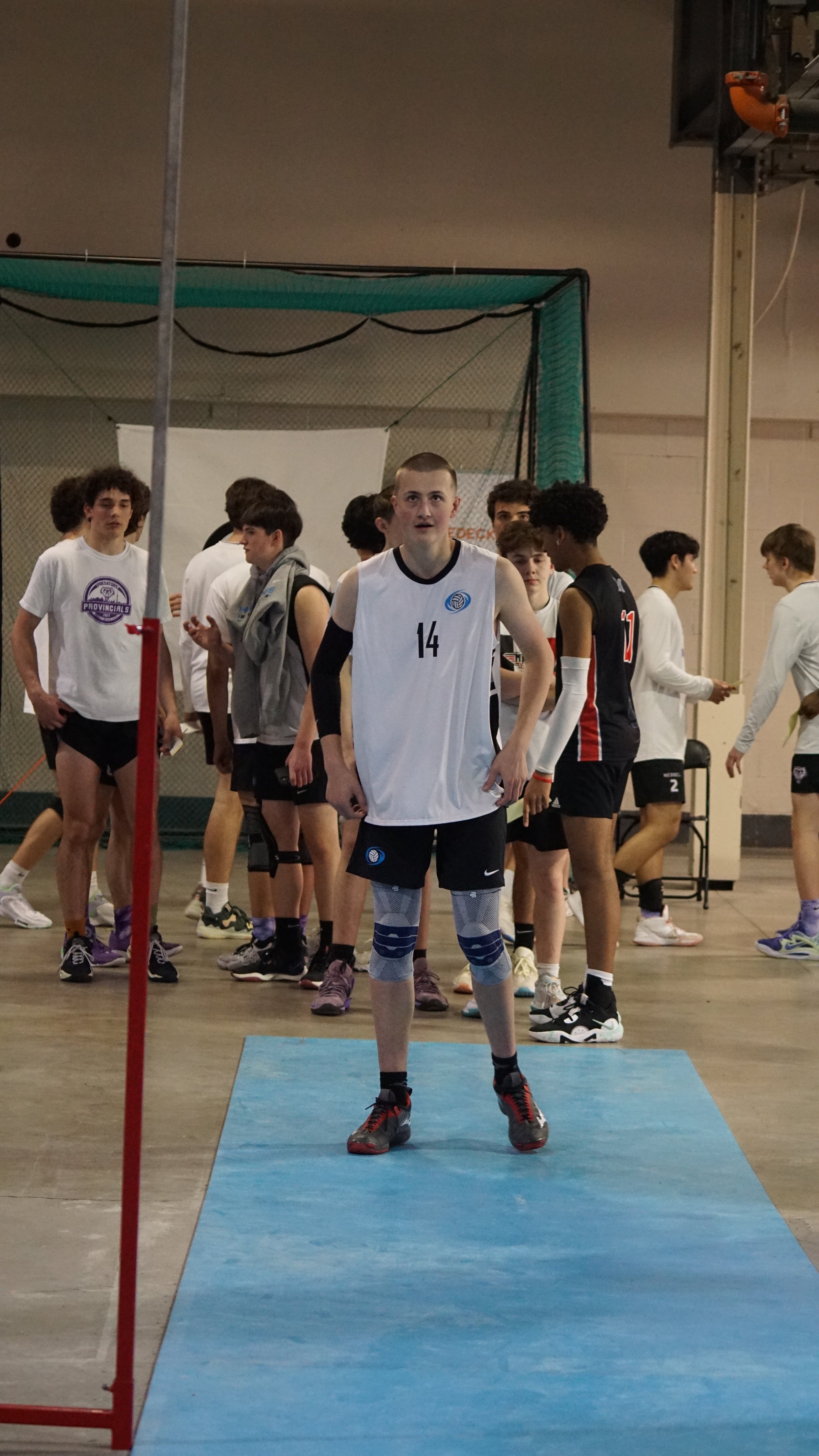
The Athlete Identification Process is used to select athletes for the Team Ontario indoor and beach programs. ALL athletes that registered to be identified for Team Ontario programs (Tall Maples, Team Ontario Regional Program, Team Ontario Indoor, Team Ontario Beach) need to complete physical testing during Ontario Championships as part of the application process.
Athletes can attend the booth at any time while it’s open, and the process should take about 10 minutes per athlete.
-
See below for our physical testing dates and times:
Thu, Apr 16, 2026 — 9:00am - 5:00pm
Fri, Apr 17, 2026 — 9:00am - 5:00pm
Sun, Apr 19, 2026 — 9:00am - 5:00pm
Mon, Apr 20, 2026 — 9:00am - 5:00pm
Thu, Apr 23, 2026 — 9:00am - 5:00pm
Fri, Apr 24, 2026 — 12:00pm - 4:00pm -
A mandatory warm-up will be provided to all athletes to complete prior to their physical testing. This will ensure the safety of the athlete while also maximizing their testing results.
HEIGHT
A measurement of the athlete’s height will be taken with shoes off.
With the athlete’s shoes off, they will step onto the platform of a stadiometer and face outwards. They will be instructed to stand flat-footed, tall, and with the chin tucked. A headpiece will be lowered until it contacts the head of the athlete. The device will indicate the athlete’s height for the evaluator.
STANDING ONE HAND REACH
A measurement of the athlete’s standing vertical reach with their dominant hand.
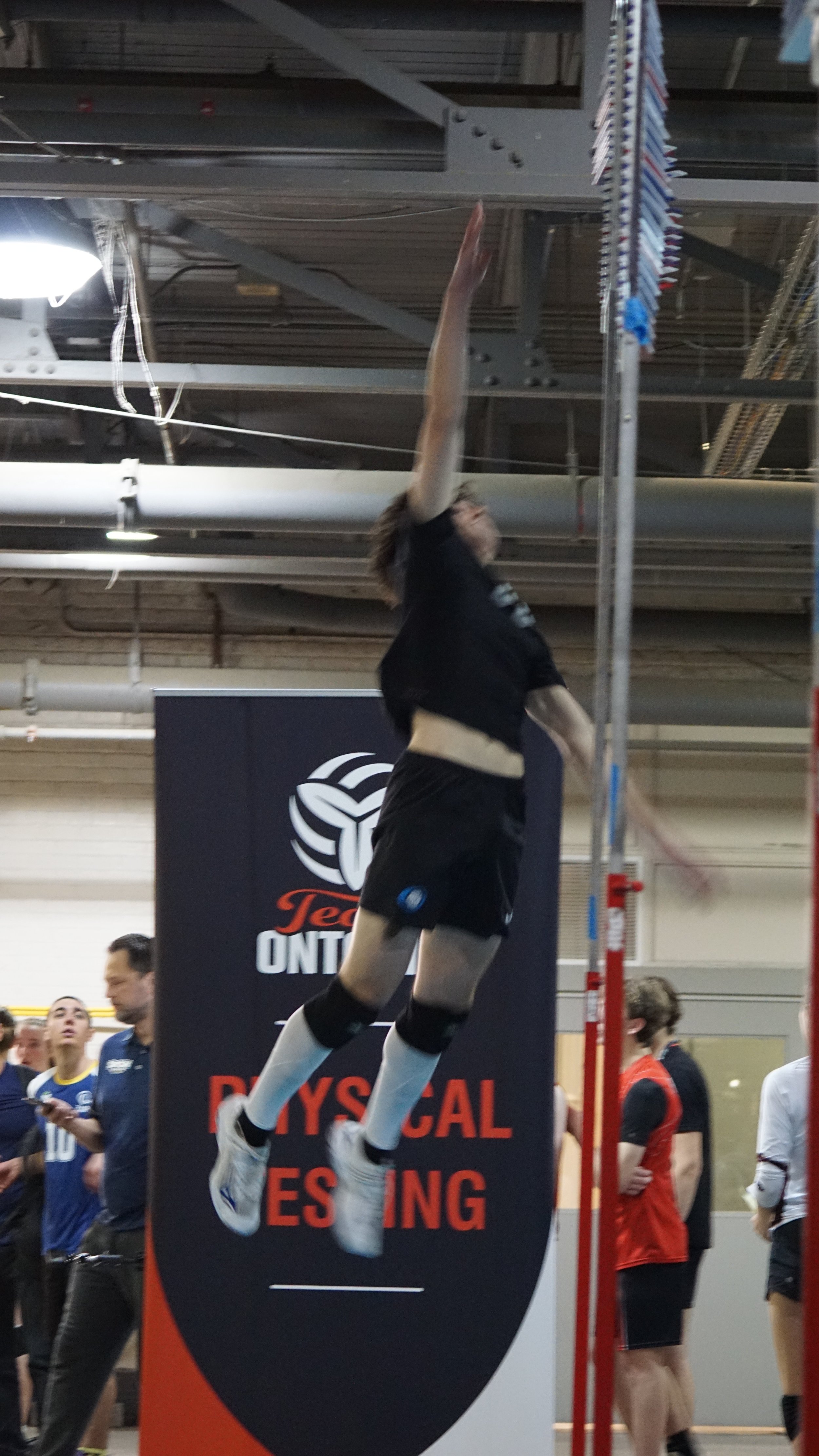
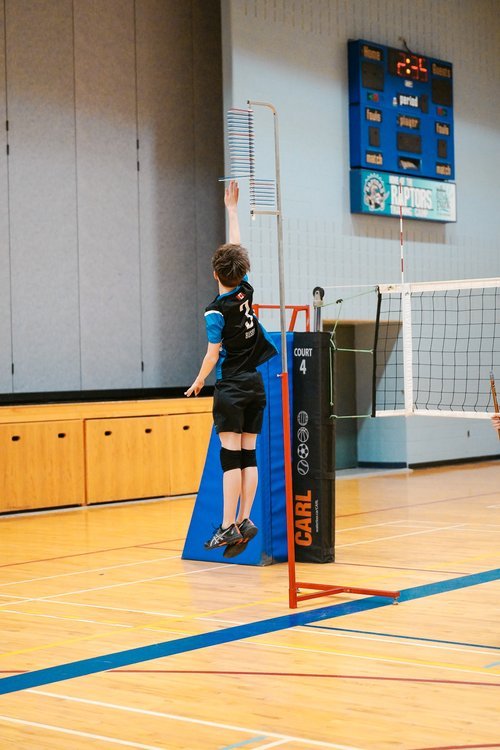
This test will be done with a vertec device
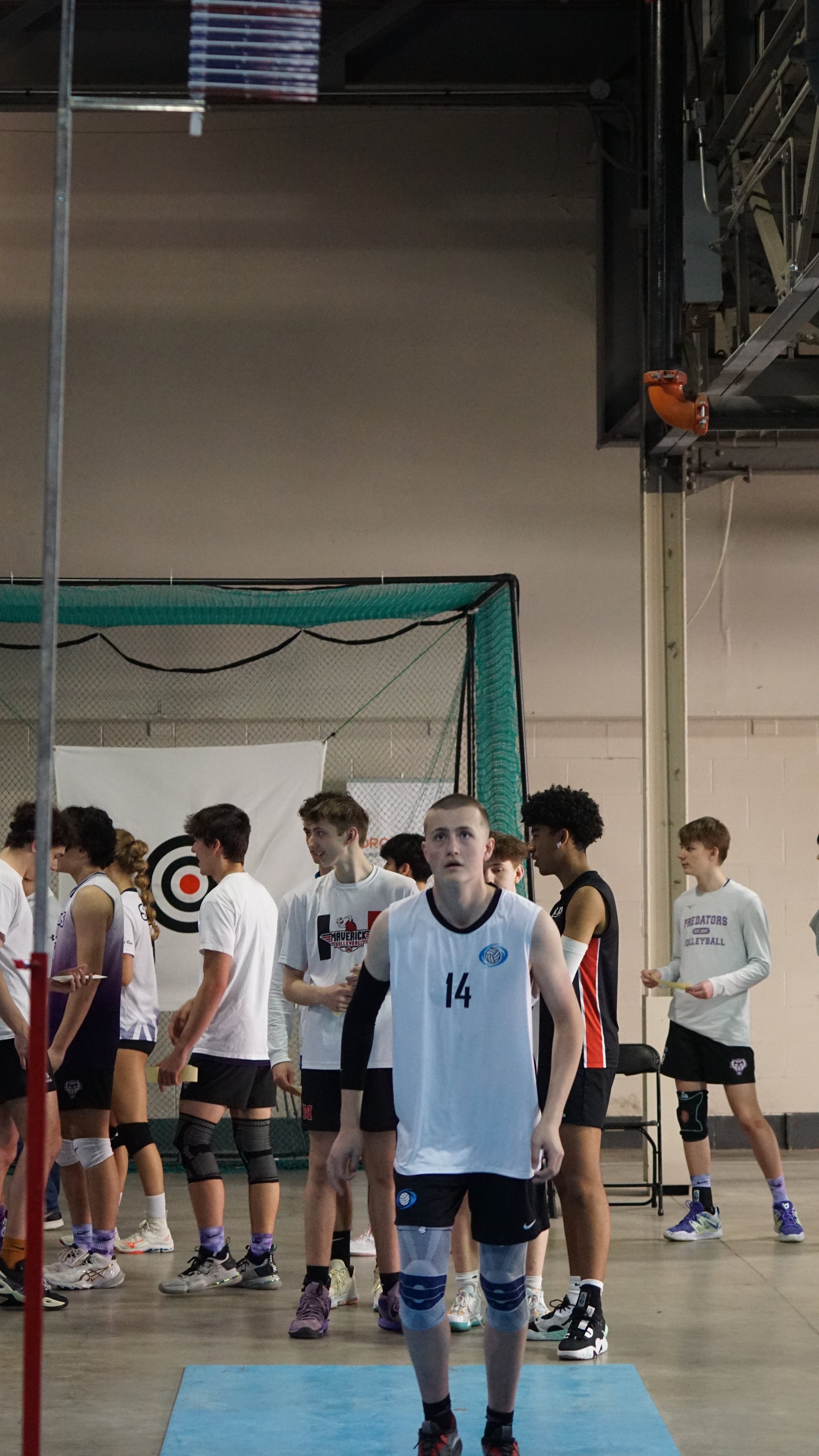
With the athlete’s shoes on, they will stand in front of the vertec and reach as high as possible with their dominant hand. Athlete’s must remain flat footed during the test. The highest point of contact will be measured to determine the athlete’s standing one hand reach.
SPIKE TOUCH (APPROACH JUMP)
A measure of lower body power output
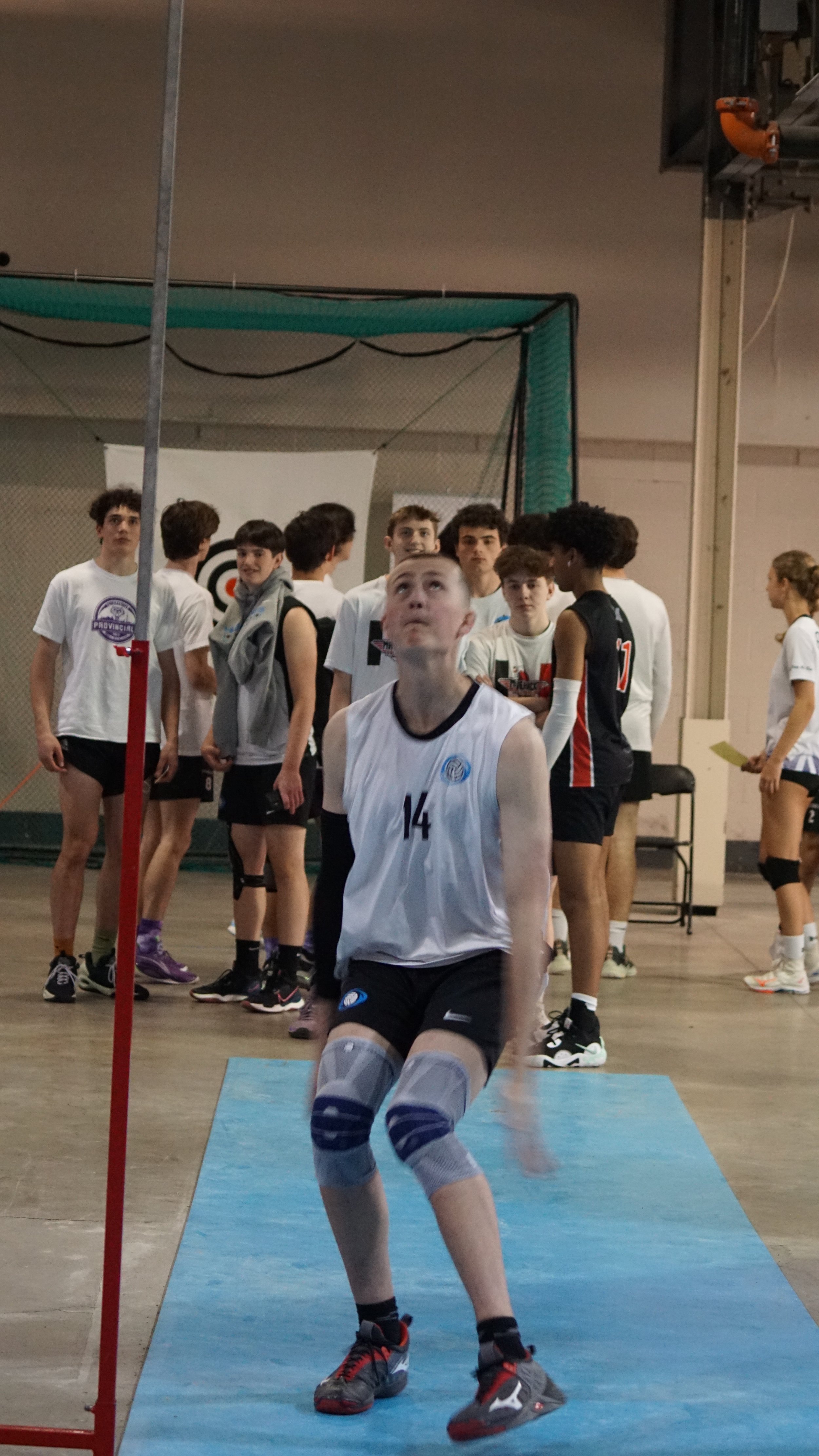
The athlete will complete their spike approach jump while reaching up and touching the highest point that they can on the vertec device with their dominant hand. The athlete must take off from two feet.
It is important to take off right underneath the vertec device to avoid broad jumping and losing height in your maximal touch point. This will be important to maximize your results.
Athlete’s will receive a minimum of 3 jump attempts and the testing will conclude once there are 2 consecutive misses. Athletes will rest 15-30 seconds between attempts.
The highest touched point will be recorded and converted into a vertical jump measurement by subtracting the athlete’s standing reach from their jumping reach.
Coaches will utilize both the absolute vertical jump measurement (i.e 25 inches) as well as the highest touched point (i.e 120 inches or 10’0”) to help with the selection process.
The absolute vertical jump measurement is a measurement that can determine an athlete’s lower body power output. Not only is it important for the athlete’s jumping ability, but it can also serve as an indicator for speed, agility, and stability on the court.
THROWING VELOCITY
A measure of rotational power, shoulder + hip separation, and elasticity.
The athlete will stand 5ft in front of a 10×10ft cage on a taped marker with a mini volleyball that weighs 151g (± 5g). The athlete will produce a throw into the cage at their fastest velocity with a slight downward trajectory. The athlete will be given 3 attempts during the test. The athlete will be asked to maintain a staggered stance open to their dominant side while throwing and is allowed only 1 follow through step on the throw. The athlete is NOT allowed to step into the throw.
The velocity of the throw will be measured with pocket radar technology in km/h. The athlete’s highest throwing velocity will be taken as their result.
GRIP STRENGTH
A measure of neuromuscular strength output.
The athlete will hold a digital hand dynamometer in their dominant hand with the elbow at a 90-degree angle. Their elbow will sit by their side during the test.
The base of the device will sit at the base of the palm while the handle should rest in the middle of the four fingers. The device will be adjusted if needed.
No other body movement is allowed during the test.
The athlete will hold a maximum isometric contraction, squeezing the device for 5 seconds. The athlete will rest for 15s and repeat for a 2nd trial.
The highest force output will be taken in KG.